Recycling and Sustainability for Gardeners Silvertown
 Gardeners Silvertown is built around a simple idea: greener outdoor spaces should be created and maintained with the lightest possible footprint. From the first soil movement to the final collection of green waste, every part of the service is shaped by a practical sustainability mindset. That means making smart choices on disposal, separating materials correctly, and reducing unnecessary vehicle mileage wherever possible. We aim for a recycling percentage target of 90% for all recoverable green waste and suitable hard landscaping materials, helping keep usable resources in circulation for longer.
Responsible recycling in a busy urban setting
Working in Silvertown means operating in an area where waste streams are closely managed and local borough policies often encourage separation at source. For Gardeners Silvertown, that means sorting organic matter, timber offcuts, pots, metal fixings, cardboard, and other recyclable items so they can enter the right recovery route. In nearby boroughs, waste separation is increasingly focused on keeping green waste away from general rubbish, and we support that approach by keeping our own collections clean and organised. It is a straightforward habit, but it makes a real difference to how much material can be recycled rather than sent to landfill or energy recovery.
Local transfer stations and better material recovery
 To support efficient disposal and processing, Gardeners Silvertown uses local transfer stations wherever possible. Using nearer facilities reduces travel distance, improves route efficiency, and lowers the overall carbon cost of moving waste. These sites are important points in the recycling chain because they help separate, weigh, and direct materials to the correct specialist processors. Whether the load contains soil, branches, grass clippings, old compost sacks, or mixed garden debris, transfer stations help ensure the right recycling path is chosen.
We also keep a close eye on load quality before collection. A cleaner load is a more recyclable load, and that starts on site with disciplined separation. Gardeners Silvertown treats organic waste as a valuable material, not a disposal problem. Wherever possible, shredded cuttings and prunings are directed toward composting or mulching routes, while untreated wood can often be recovered for reuse, chipboard processing, or biomass-related applications.
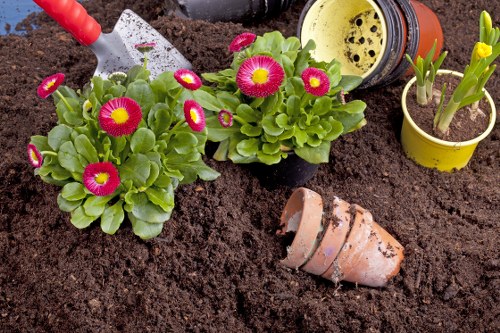
 This approach also fits the wider environmental priorities of east and south-east London, where boroughs often promote clearer sorting for food waste, paper, plastics, metals, and garden waste. While our work is focused on landscaping and maintenance, we align with those local expectations by keeping recyclable streams distinct and avoiding contamination. In practice, that can mean removing soil from plant pots, separating broken terracotta from general rubble, and keeping metal garden components out of mixed waste so they can be recycled properly.
Partnerships with charities and reuse-focused organisations
Not every item needs to be recycled straight away. Some materials still have useful life left in them, and that is where our partnerships with charities become especially valuable. Gardeners Silvertown supports donation and reuse where suitable, helping pass on reusable tools, planters, decorative containers, staging materials, and selected outdoor fittings to organisations that can redistribute them. This can extend the life of items that would otherwise be discarded, supporting community projects while reducing waste.
Charitable partnerships are particularly helpful when a site refresh creates surplus materials that are still in good condition. Instead of sending everything to a mixed waste route, we look for opportunities to rehome usable items. It is a practical expression of sustainability: reuse first, recycle second, dispose last. By prioritising recovery and donation, Gardeners Silvertown helps reduce demand for new materials and supports a more circular local economy.
Where items cannot be reused, we still try to keep them in the recycling loop. Metals, hard plastics, clean cardboard, and certain packaging elements can often be separated and sent to appropriate facilities. Even small decisions matter here. An old fixture with recoverable metal value, for example, should not be hidden in a general load if it can be removed and processed on its own. That kind of care improves recycling outcomes and supports the wider environmental performance of the service.
Low-carbon vans and efficient site operations
Gardeners Silvertown is also focused on transport emissions, which are a major part of any urban service. Our low-carbon vans are selected to reduce fuel use and lower emissions on the road, especially for short local journeys between projects, transfer stations, and recycling partners. Efficient routing, well-planned scheduling, and load consolidation all help cut unnecessary mileage. In an area with busy streets and frequent stop-start traffic, that approach is essential for keeping the service as low-impact as possible.
Vehicle choice is only one part of the picture. We also encourage operational habits that support sustainability every day, such as maximising payloads, avoiding wasted trips, and choosing the nearest suitable facility for each material type. For Gardeners Silvertown, lower emissions are not a separate initiative; they are part of the way the service is run. That includes making decisions that reduce idling, improve route planning, and support a cleaner journey from garden to recovery point.
 Sustainability also shows up in the details of routine maintenance. For example, green waste is kept distinct from builder’s rubble, reusable bags are retained when safe to do so, and recyclable packaging is flattened and sorted rather than mixed in with organic material. These habits might seem small, but they contribute to a better recycling rate and a more efficient local process overall.
Putting recycling into everyday gardening work
In practical terms, recycling for Gardeners Silvertown is woven into everyday service rather than treated as an afterthought. A hedge trim, for example, produces a stream of branches, leaves, and clippings that can be managed as organic waste for composting. A planting refresh may generate cardboard, nursery wrapping, and broken pots, which should be separated into their appropriate categories. Even a simple clearance can reveal recyclable metals, clean timber, and reusable fixtures if the load is handled carefully.
The borough-wide emphasis on waste separation supports this kind of work, and we respond with methods that make recycling easier and more effective. We look for opportunities to reduce contamination, keep recoverable material clean, and send each item to the most suitable processing route. That is why our recycling percentage target matters: it gives shape to a daily commitment to keep resources in use and reduce the amount of material lost to disposal.
 For Gardeners Silvertown, sustainability is not a slogan; it is a practical framework for better gardening. By combining local transfer stations, charity partnerships, low-carbon vans, and careful waste separation, the service supports cleaner outdoor spaces and a lighter environmental footprint. The result is a more responsible approach to garden work across Silvertown and the surrounding boroughs, where recycling, reuse, and resource efficiency all play a meaningful role in how the landscape is maintained.